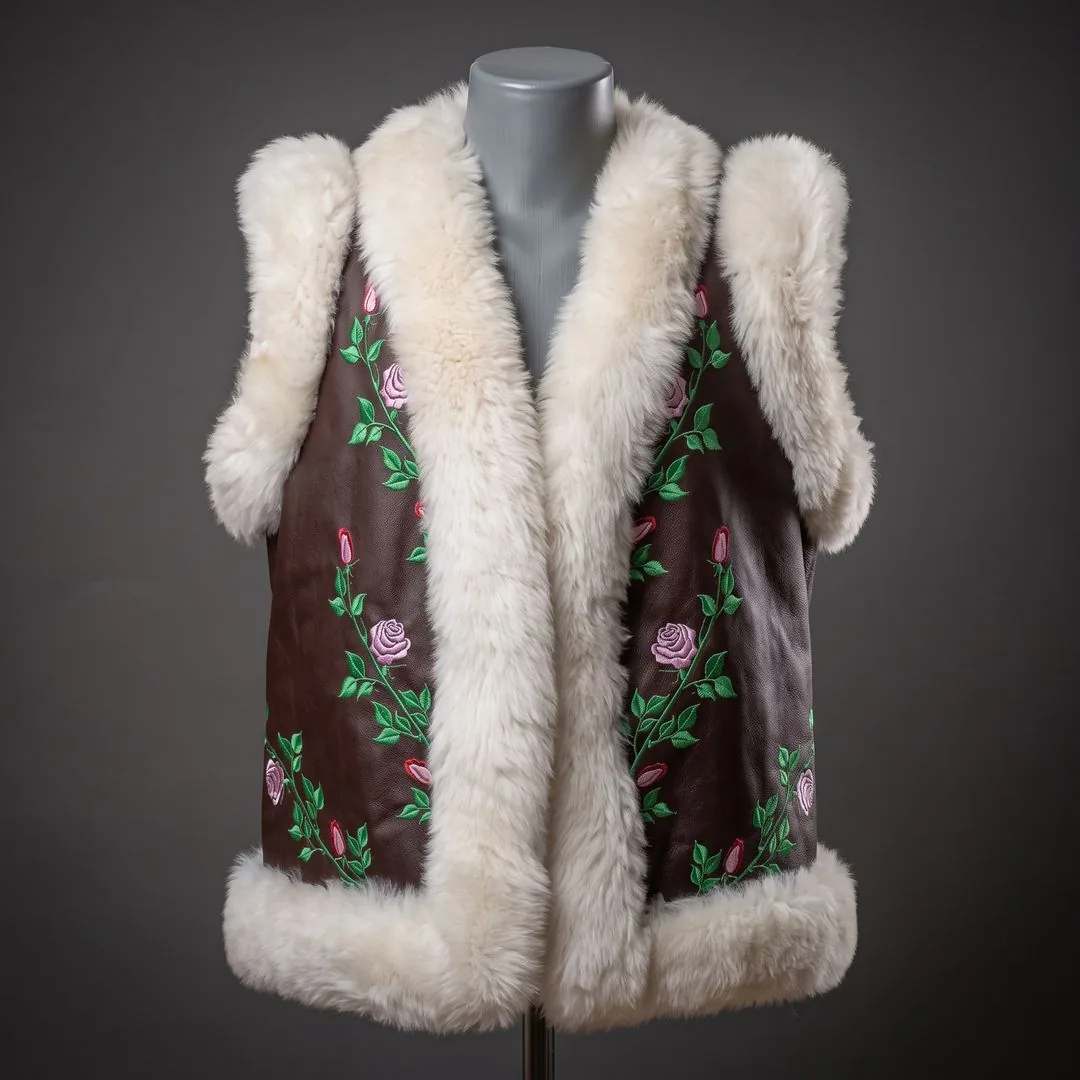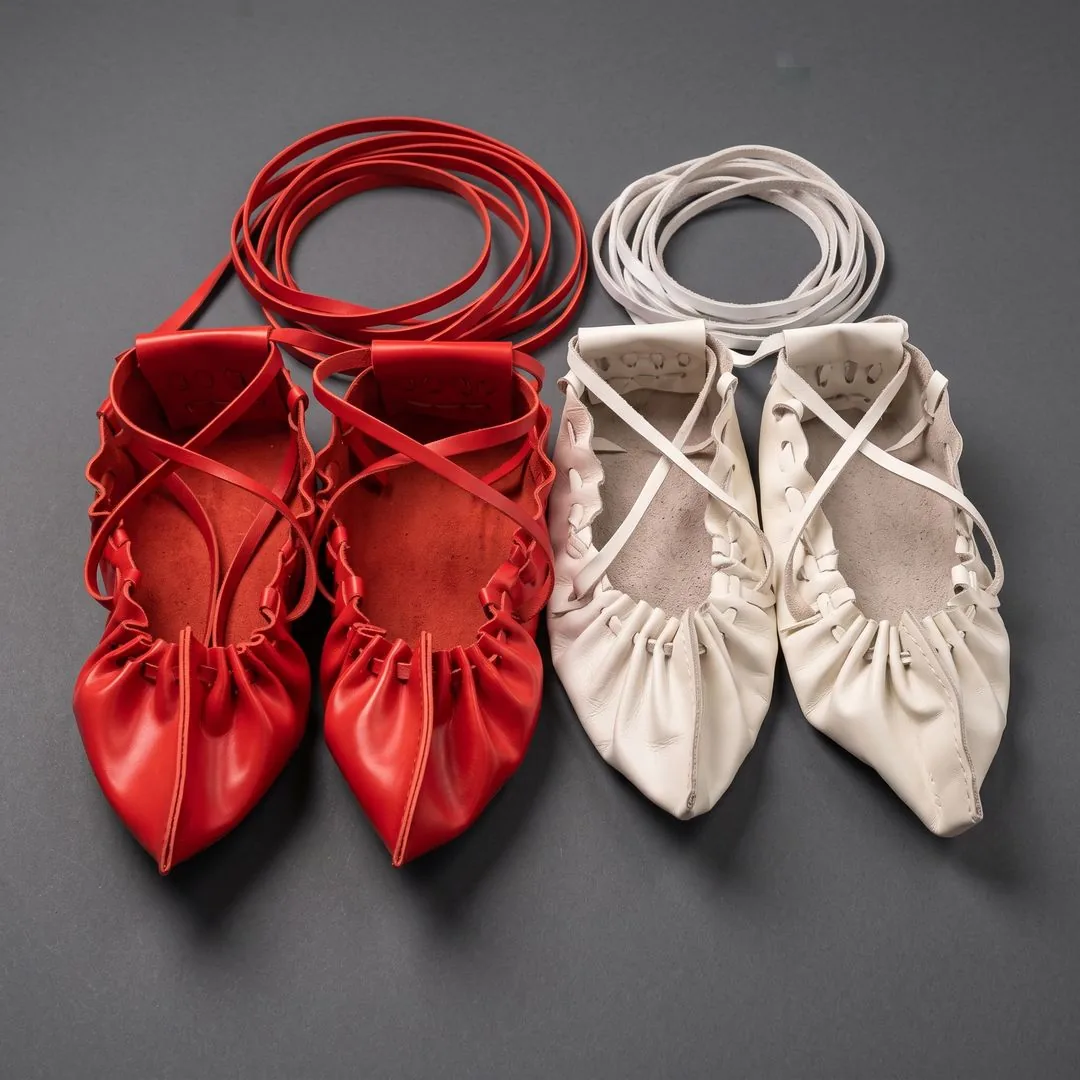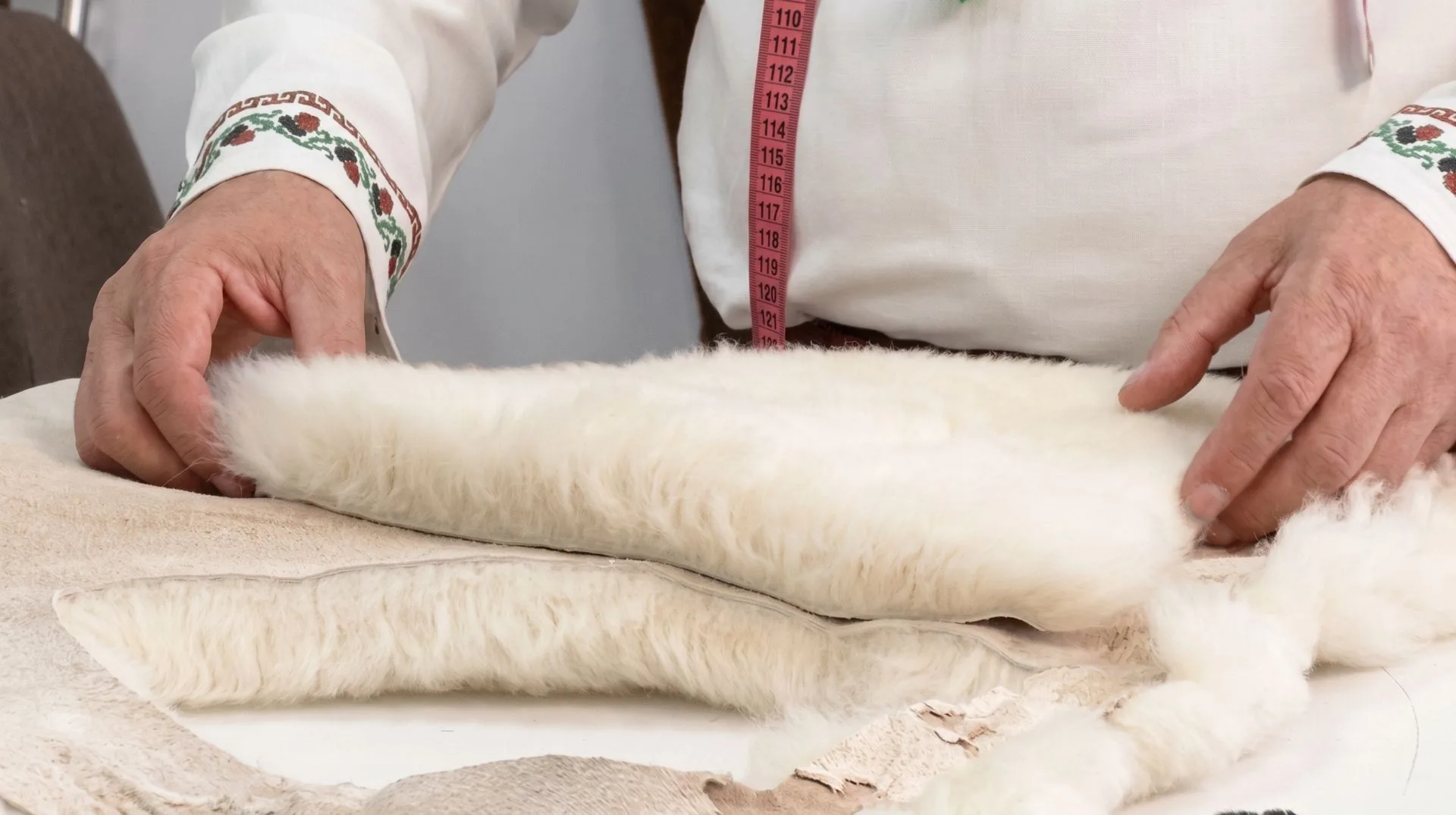
What is left over is not thrown away. That is the gold of the trade.
What is left
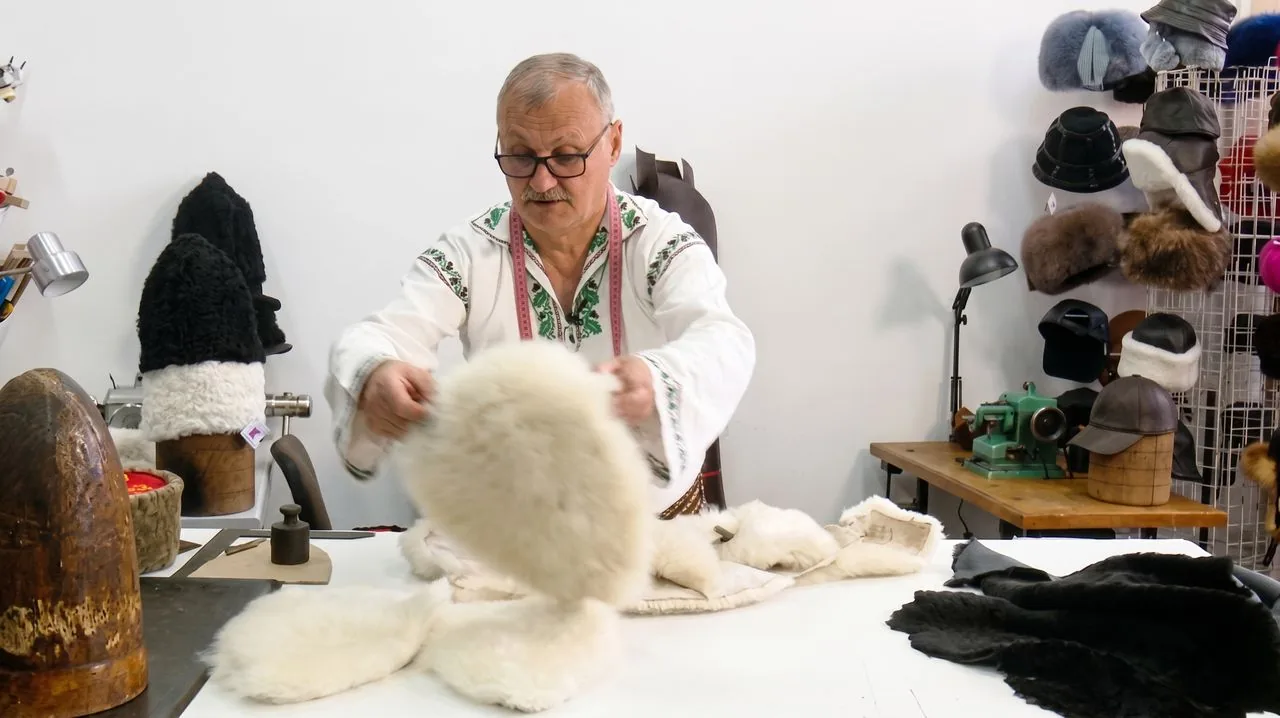
Once the cușmă is cut, pieces are left over. They are not thrown away. They are cleaned, joined to one another, and become the lining of a căciulă.
It is not a policy written down anywhere, it is how the work has always been done. The offcut comes from the same hide, so it has the same hair and the same colour.
Repair
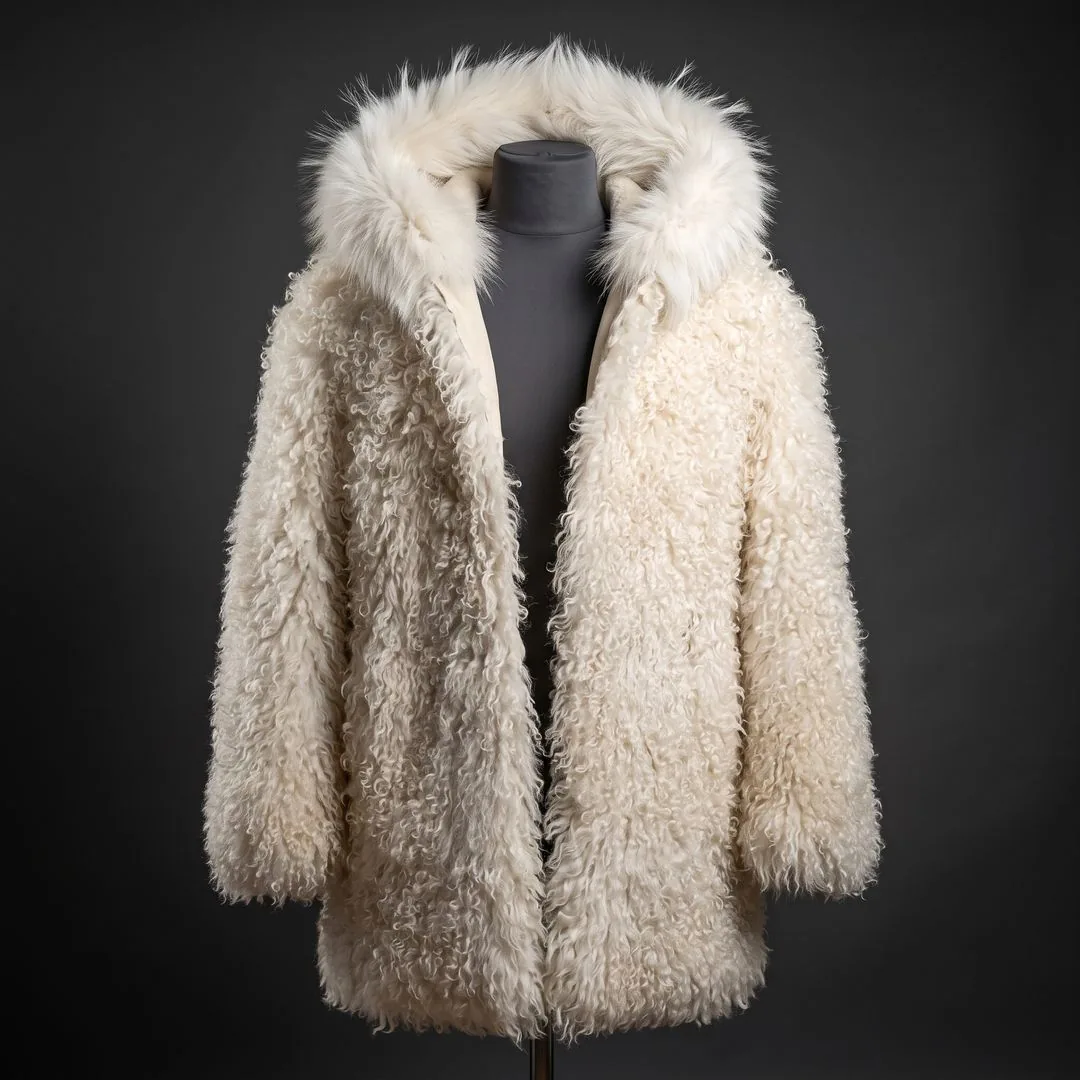
He did not know how to make a pocket. A man came in with a coat torn at the pocket. He took the pocket apart, made it again, and that is how he learned to make one. Then a lapel. From there came all the leather clothing.
So repair is not a sideline of the workshop, it is where the workshop began. A piece repaired is a piece not replaced.
The machines
The qualification is not one trade but three: cojocar, blănar and maintenance mechanic. The third one is for the machines.
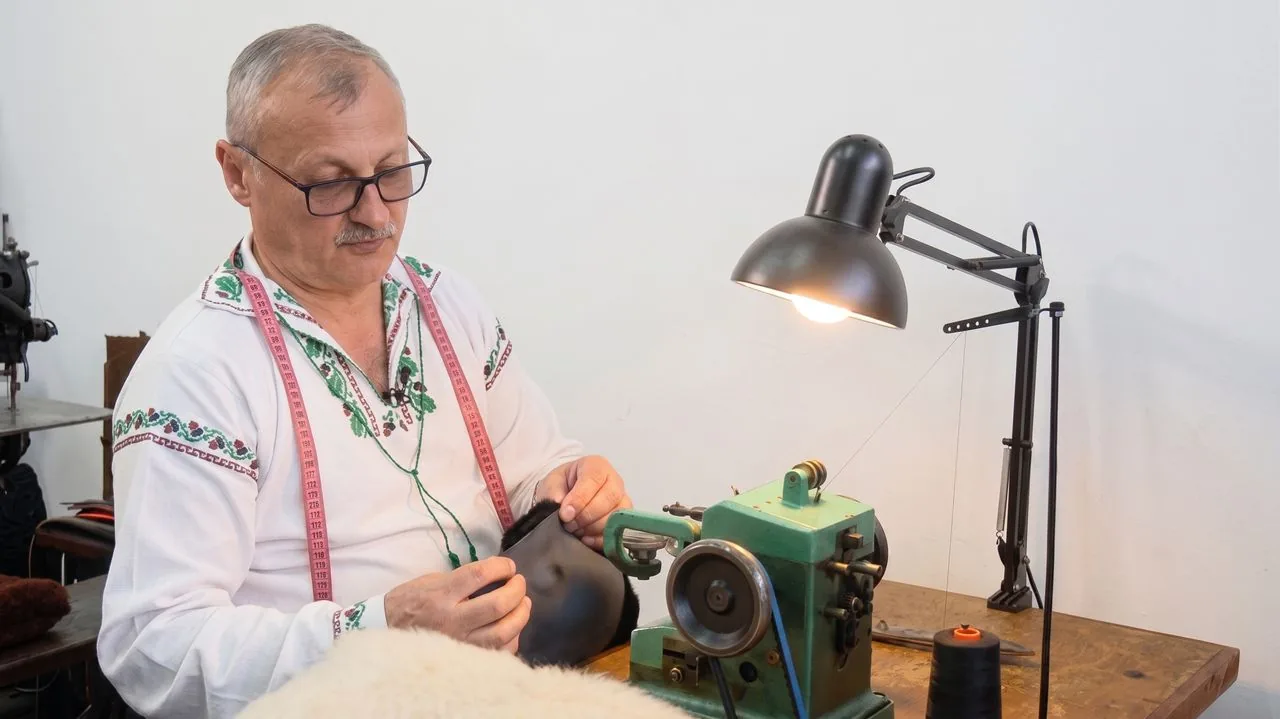
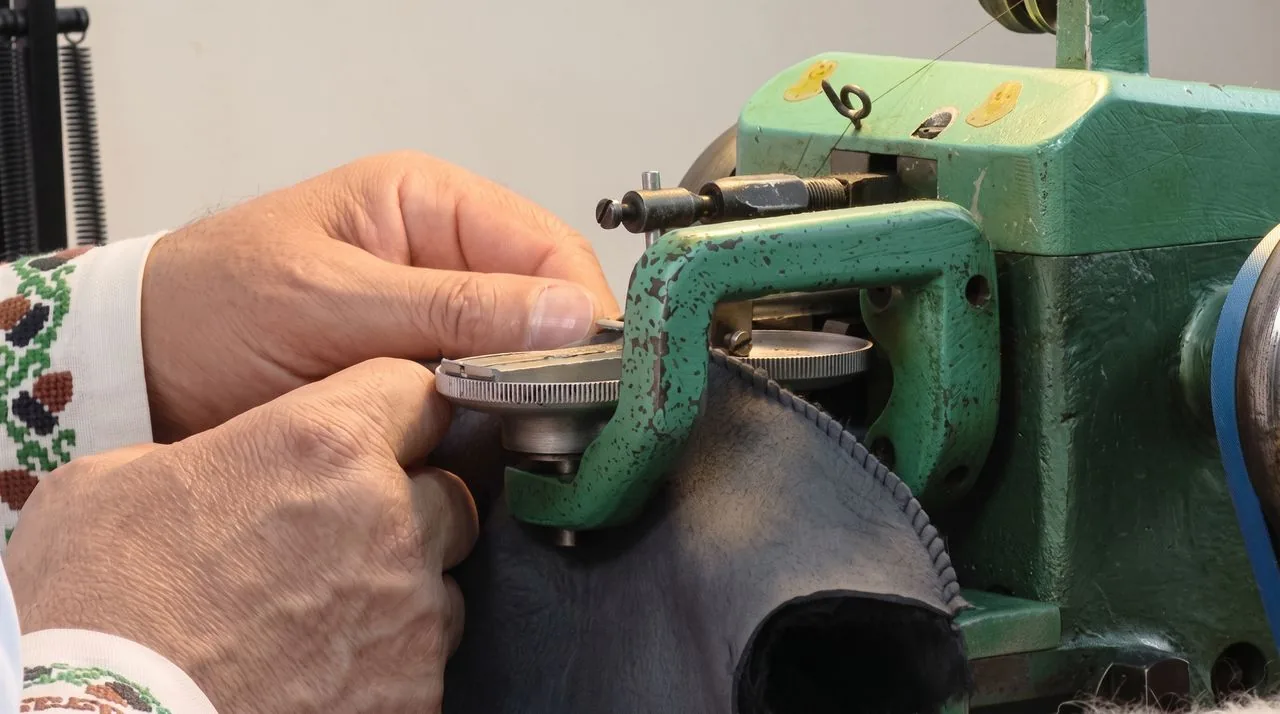
The workshop machines are old and they are kept running rather than replaced. When one breaks, it is repaired in house, by the hand of the man who sews on it.
What has changed
Înădit means a piece completed with an added scrap. When material was scarce, a cap was made from whatever was at hand and piecing was accepted.
You worked with what you could find. An added piece bothered nobody, because there was not much to choose from anyway.
We avoid it, and the reason is plain: “it no longer matches”. The added piece no longer falls the same way, and the person who comes to buy looks.
The offcuts find their place in the lining, where they are joined and, brushed at the end, can no longer be told apart.
The pieces
What was made here can be brought back here, to be repaired or reconditioned.
How long the learning takes
to learn a trade, sometimes you need a whole lifetime.
This is the whole of the responsibility we can honestly claim: nothing usable is thrown away, whatever can be repaired is repaired, and the machines are kept alive.