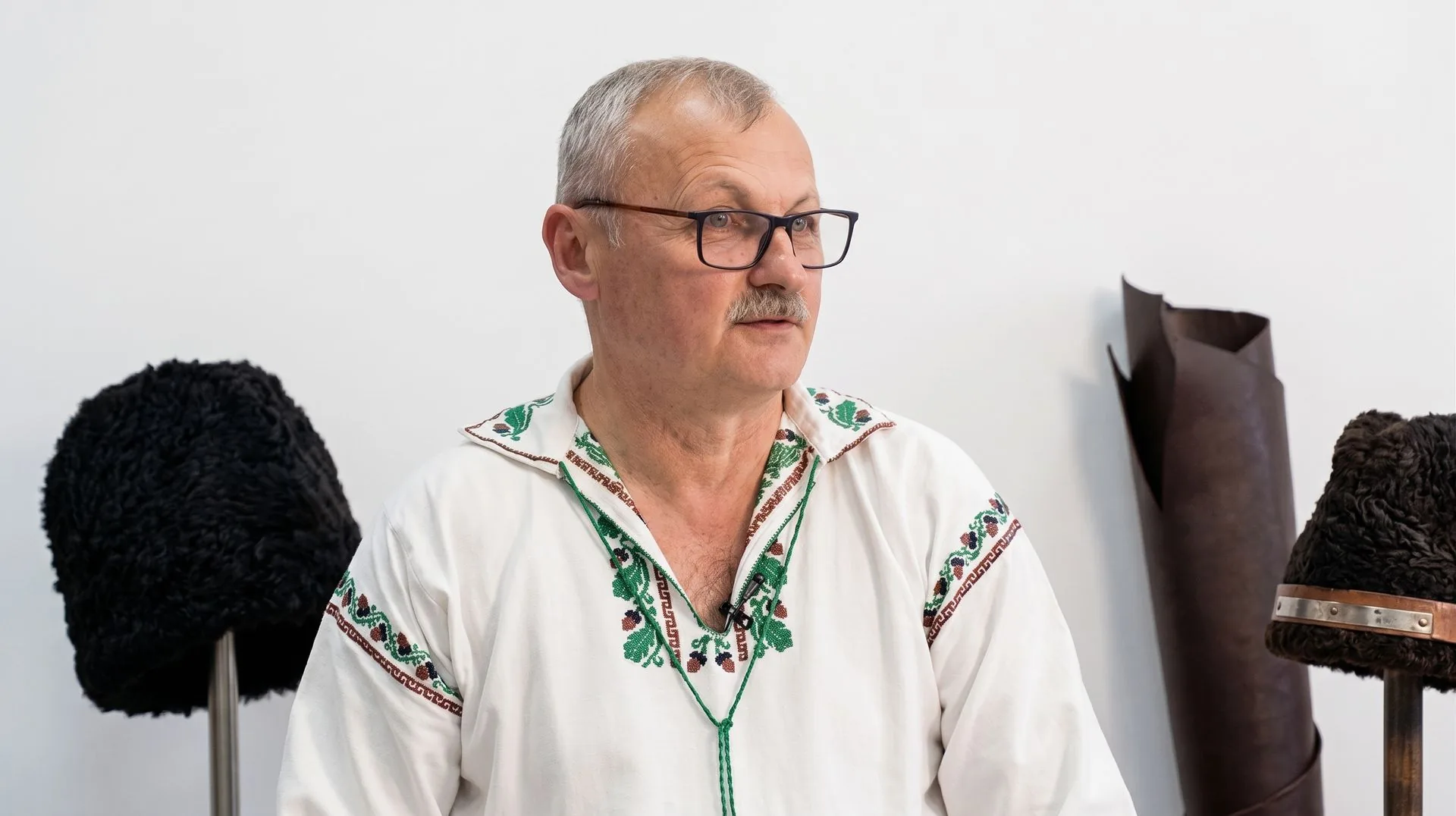
A trade learned through challenges
A trade learned through challenges
The thread of the story
Brăila, on the Danube, since 1986
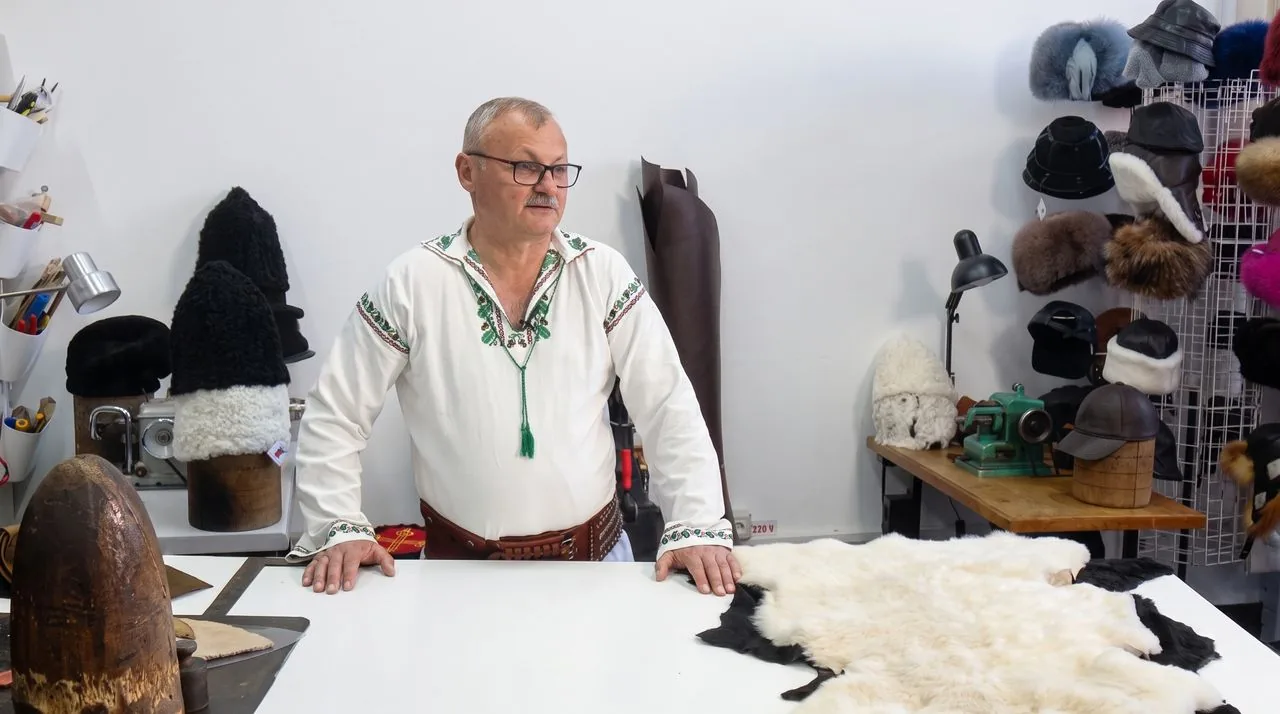
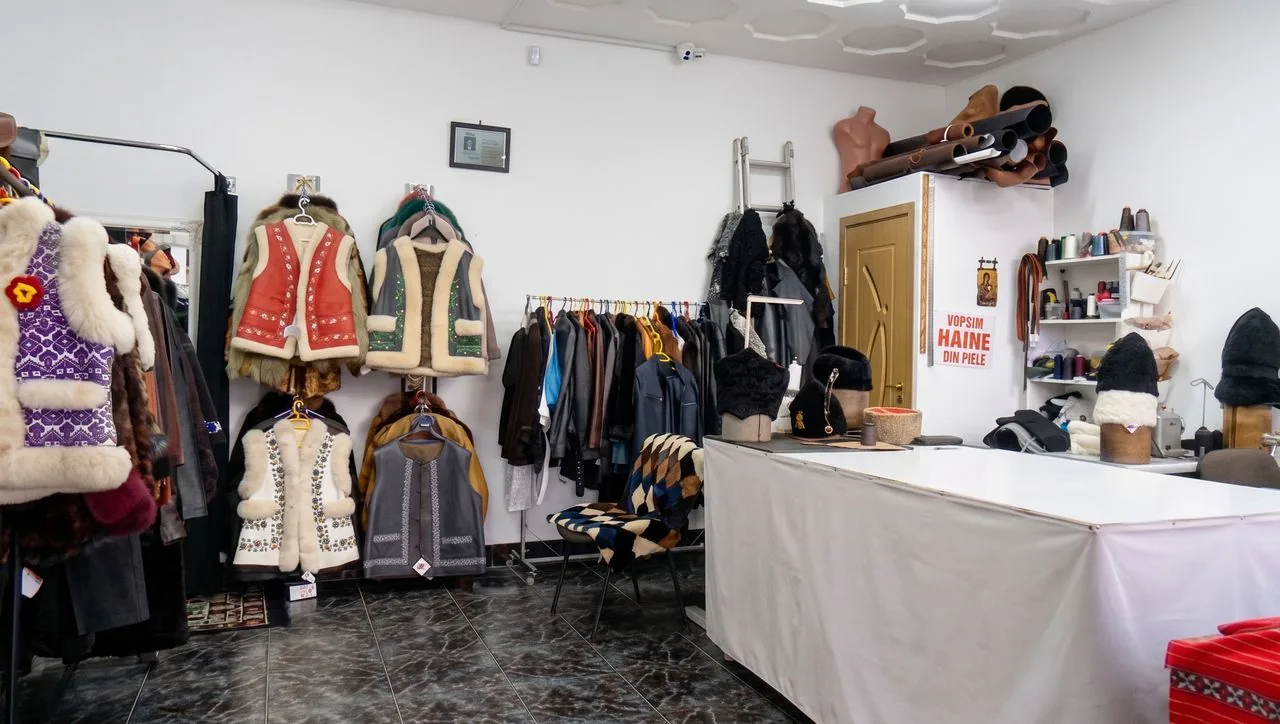
The workshop and the shop are one place, in Brăila, on the bank of the Danube. Florin Spiridon works here, and he puts it plainly: “I started in the trade in 1986.” His story does not begin with a calling but with a circumstance, and it moves on from one challenge to the next: each time, somebody came in wanting something he could not yet make, and he learned to make it.
- I
Not a calling
“Circumstance was what put me into a vocational school for sheepskin work.” The school was in Iași, the practical training was done in Brăila. He was a child and did not take to it at first: his mind was on playing and on sport. He qualified by examination, then left for military service, “those were the rules”. He came back with a clear reckoning: “I wanted to get further than my parents in every respect.”
- II
The masters who made him love the trade
He worked alongside Nicu Isaia and doamna Tina, who are sadly no longer with us. They taught him the trade, and the way they worked made you, as he puts it, “fall in love with this craft”. It did not happen all at once, but “over time, little by little, little by little”. That is how a circumstance turned into a trade he loves.
- III
Three trades, not one
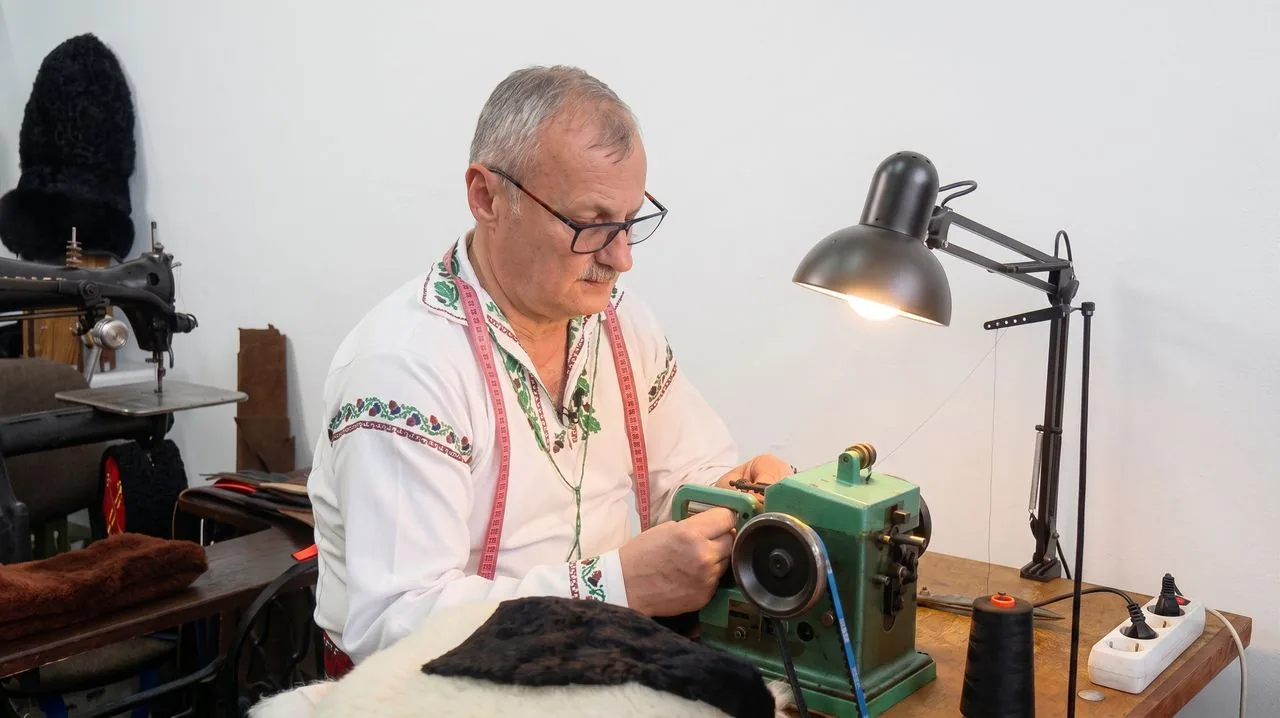
His qualification is not one trade but three: “cojocar, blănar and maintenance mechanic”. The third is not a formality. He services the machines of the trade himself, so the workshop does not stop when a machine does.
- IV
People came in wanting something else
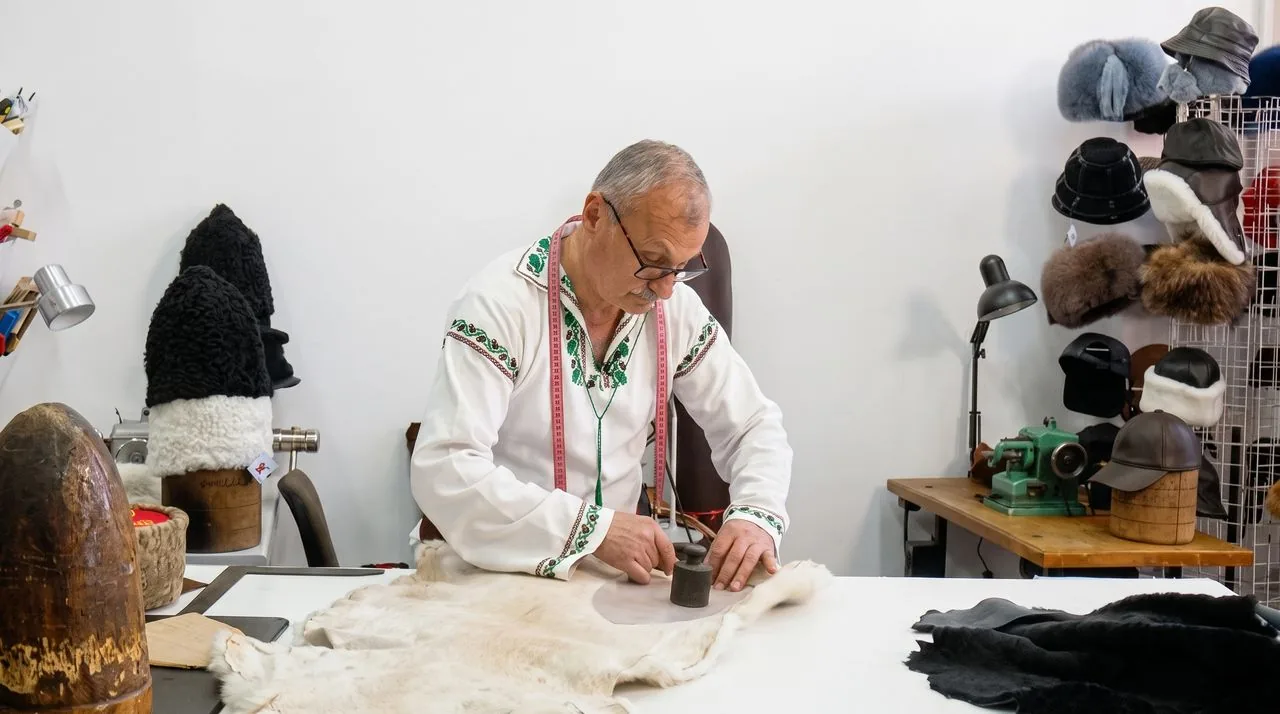
The challenges started as soon as the apprenticeship ended, customers “coming with all sorts of models, all sorts of things that wanted something other than the classic models”. That is where made-to-order work comes from, and where the early fear came from too: you worked with the customer's own material, so a bad cut ruined the customer's hide, not his. His master had let him go “the way a bird lets its young leave”. Many wanted him working only for them, wanted him to “keep his head down”. “That did not work for me, because I was a bit of a rebel and I always wanted something else.”
- V
He learned to make things by repairing them
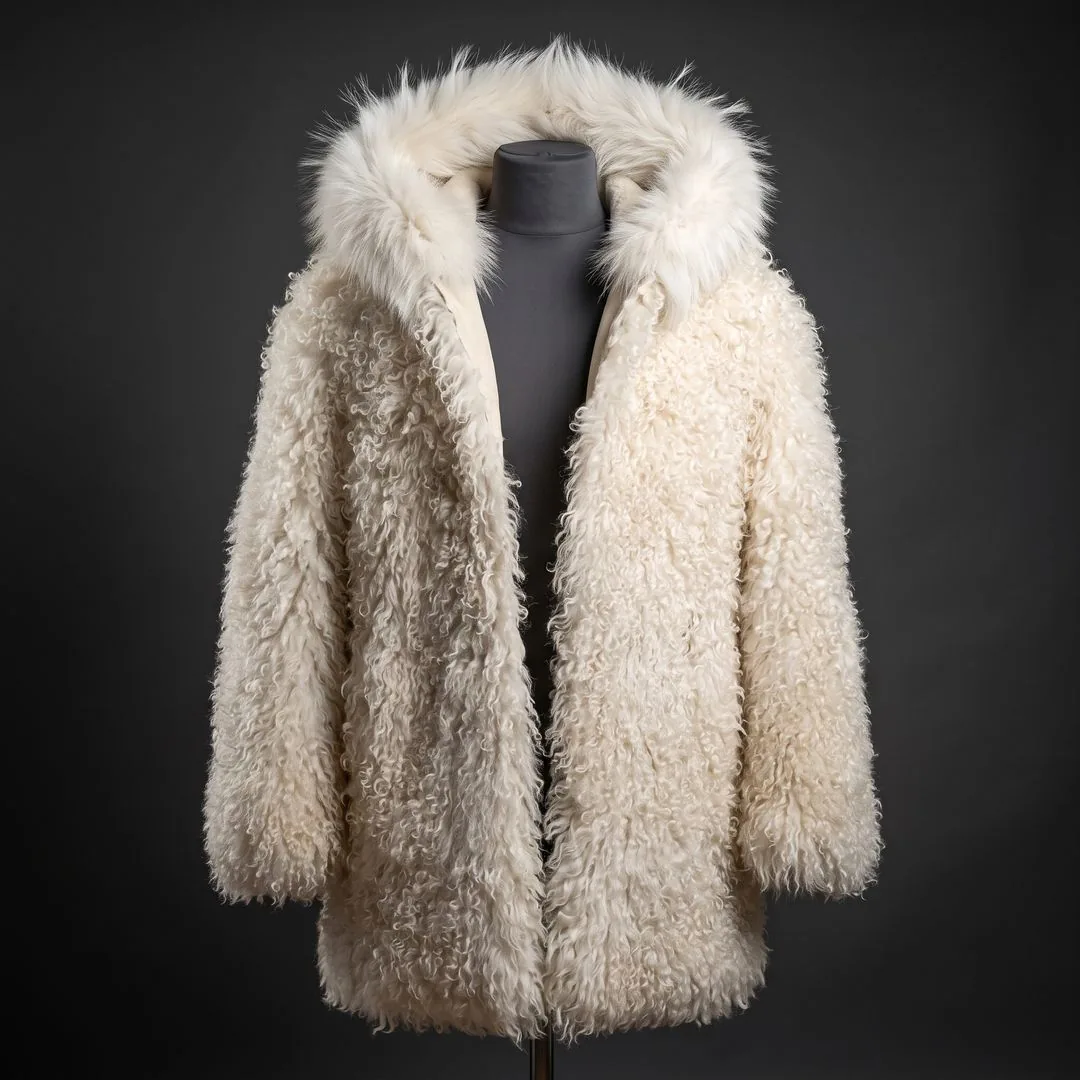
He did not know how to make a pocket. A man brought in a coat torn at the pocket: he took the pocket apart, put it back together, and that is how he learned to make one. Then a lapel. That is where the leather clothing began, out of a repair, and it is where restoration comes from as well, still one of the three things the workshop does.
- VI
First a belt, then a chimir
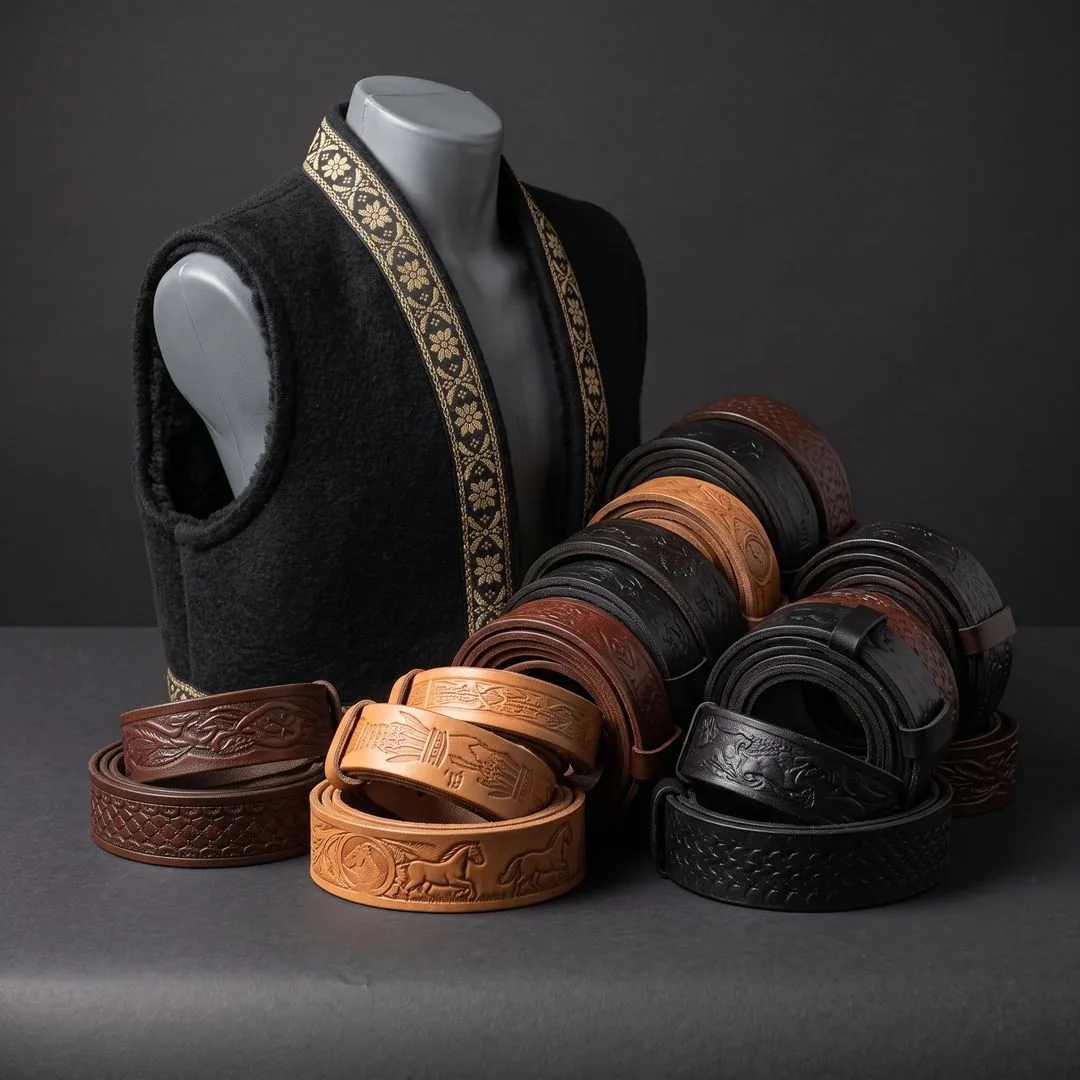
The third challenge came from people as well. At events he was asked for a belt, then for a chimir. Making them was not enough: they had to come out well for the people who had asked, so he worked at them until they did. Belts have stayed in the workshop ever since, alongside the sheepskin and the fur work.
- VII
The cușmă, cut from three gores
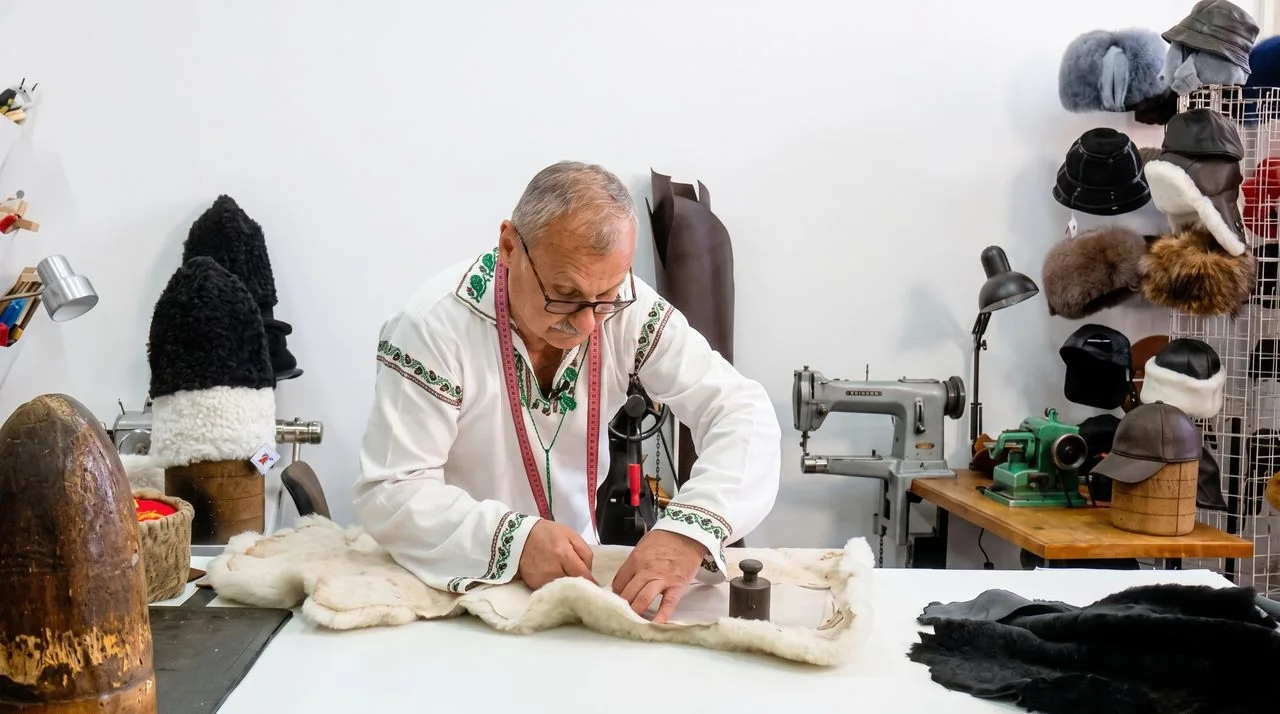
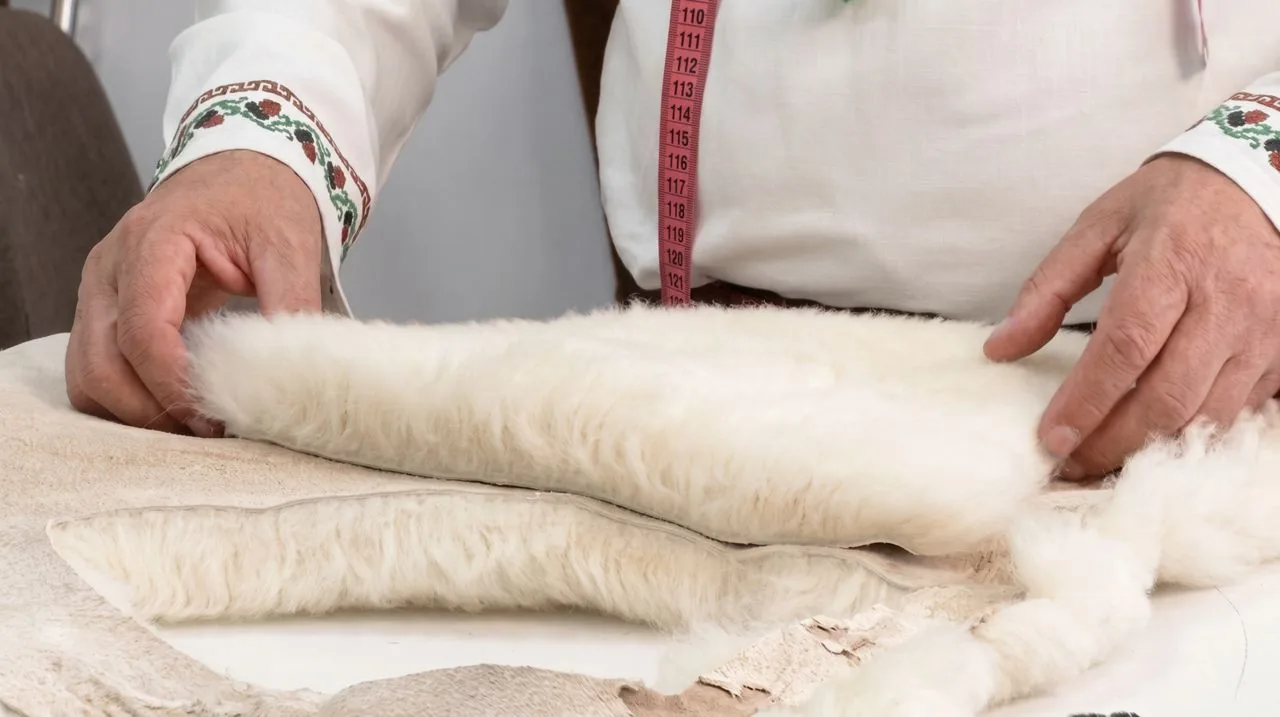
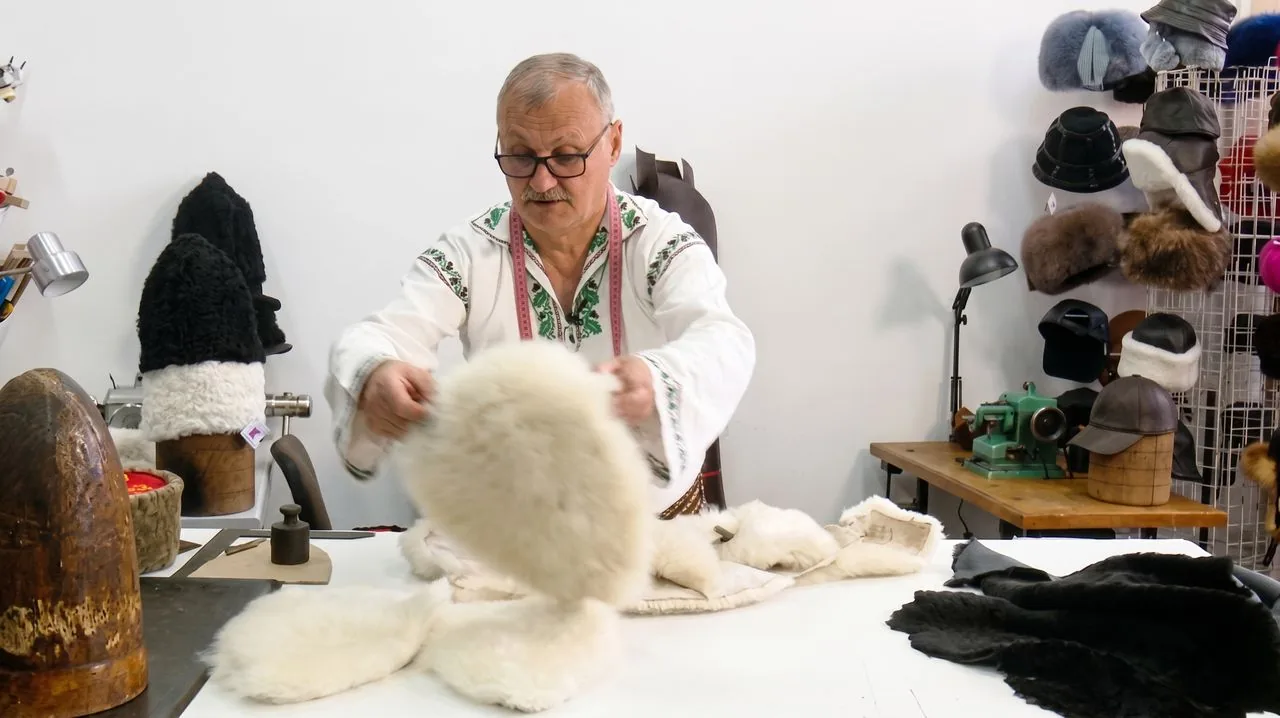
The Romanian cușmă has pride of place in the workshop. It is made from white lambskin with a longer nap, exactly the model the Romanian soldier wore in the First World War, and it is cut from three gores, with the hair running upward on every one. The hide is checked first for bald patches and for cracks. Nothing is pieced in, because an added piece no longer matches, and the customer who comes in to buy looks closely. The gores are then laid side by side and checked against one another. Fur is cut with a knife, never with scissors: scissors cut the hair fibre, and a cut fibre shows.
- VIII
That is the gold of this trade
Nothing that comes off the cutting table is thrown out. “The part that is left is not thrown away. That is the gold of this trade.” The offcuts are cleaned, joined, and become the lining of a cap. The hide the lining comes from goes through the same inspection as the face, and whatever needs repairing is repaired first. The lining is cut slightly smaller than the face, so that it sits as it should.
- IX
Closed on the machine, finished by hand
The cap is closed on the fur-sewing machine. There are two kinds of machine: one sews thick material, the others work thin hide. The lining is closed first, and the fur is tucked inside rather than left out, or the seam does not look right. A slit is left so the cap can be turned right side out, and that slit is then closed by hand. “If we brush it a little as well, you cannot even tell where it was joined.” Last of all the stiffening canvas goes in, the cap is drawn onto a wooden block to take its shape, and it is brushed once more.
- X
How the cușmă has been worn
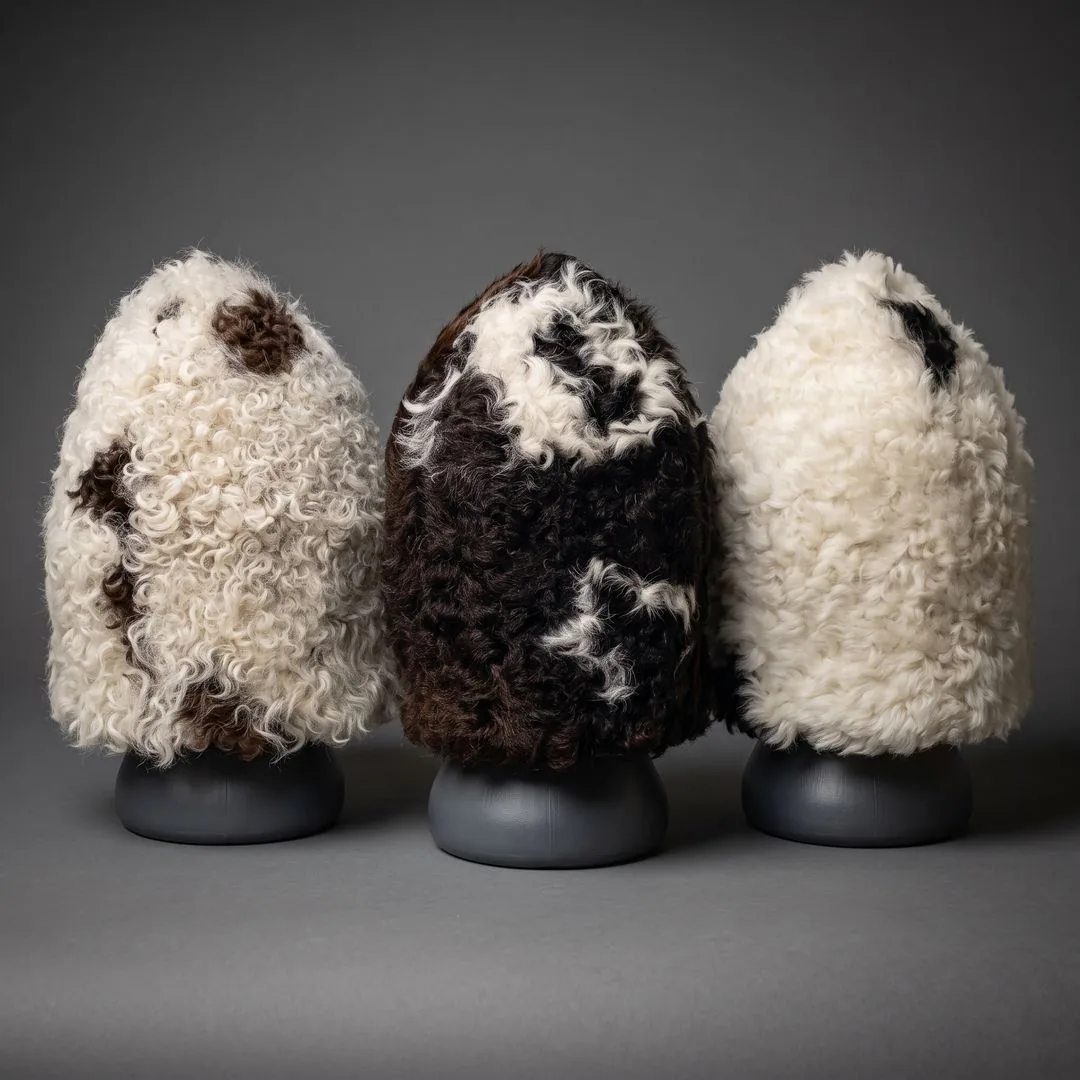
The cușmă comes from a long way back: old forebears wore it, and it is worn in more than one way. In one position it is the cușmă of Ștefan cel Mare's răzeși. Closer to our own time, the mocani wore it differently. Pulled to a point, it is the cușmă from the pictures of the Romanian soldier of the First World War, “one of the best equipped armies”. One worn slightly marked recalls Păcală, whose cușmă was made of patches. His are not made of patches.
- XI
The cușmă reached a fashion house
“A famous French fashion house took this Romanian cușmă. They put Swarovski stones and a brooch on it and they want a very serious amount of money for it.” His answer was not a complaint but one more challenge accepted: Romanian women's drawers are full of brooches, so he makes the cușmă in a way that lets it be personalised, a different brooch on a different day, in keeping with what is being worn.
- XII
Peneș Curcanul's cap
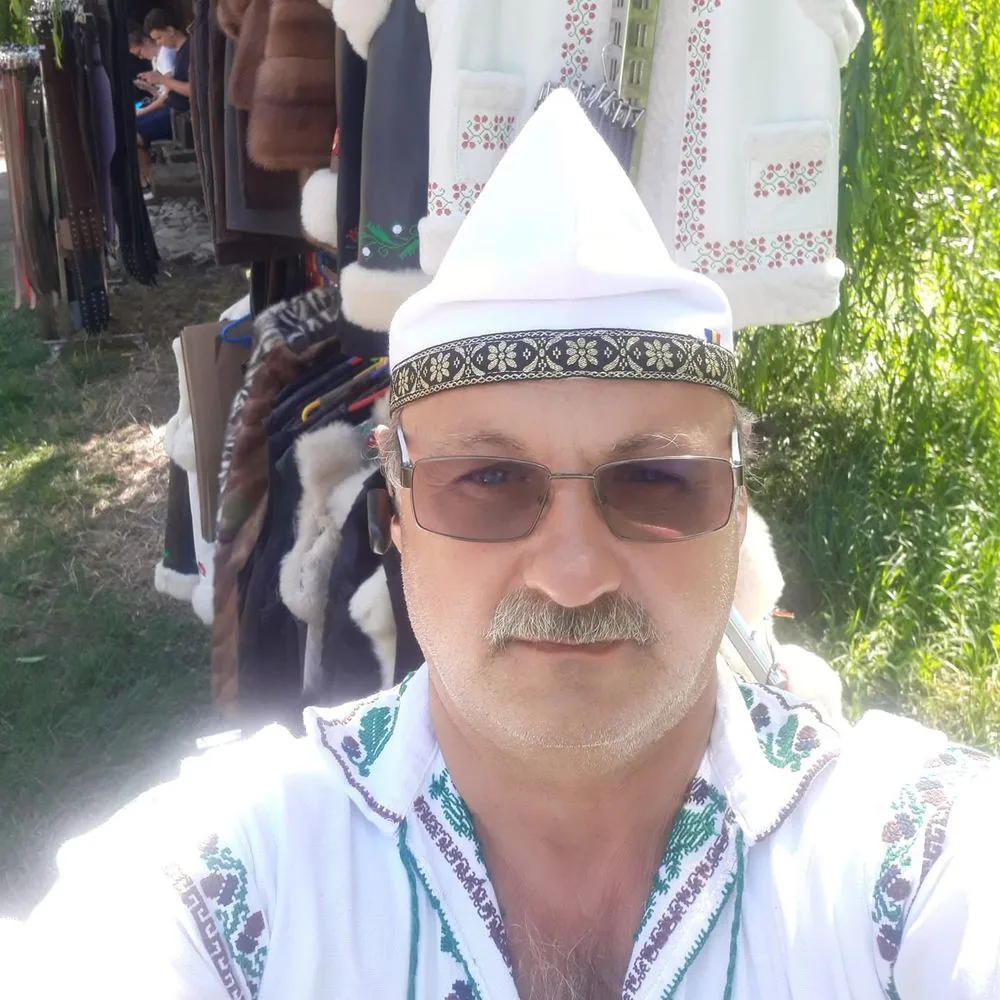
The workshop also makes a replica cap, of the kind Peneș Curcanul wore in the War of Independence. It carries the emblem of the royal house and the feather that is never missing. The lining is satin, because that is what was asked for; in the old days it was lined with lamb fur, as the cușme are. It is much appreciated at events, at historical reenactments and at gatherings of craftsmen.
- XIII
Today, in the Brăila workshop
When somebody just starting out comes in, he stops working and tells them where to begin: “For those who are at the beginning, I recommend marking out first from the pattern, to the measurements, and only then cutting.” Of young people he says that some value the craft “through the education they are given at home”, while others do not know what it stands for, and that it depends on what they are taught at school as well. He talks about the trade without illusions: “people find it harder to learn a trade now, and everyone is interested in the money side”, and “to learn a trade sometimes takes you a lifetime”.
Who keeps the workshop
The two owners
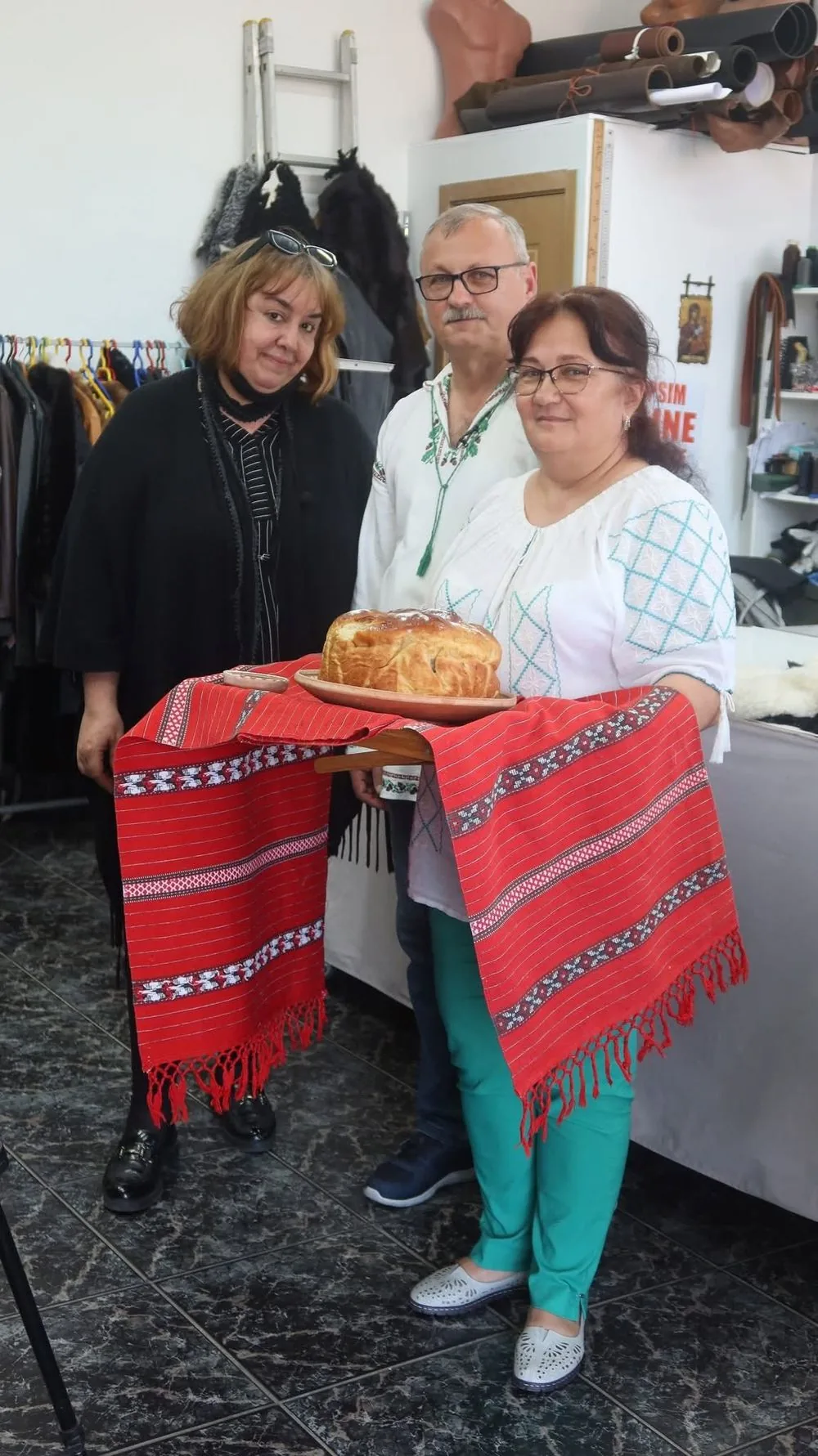
The workshop is kept by two people: Florin Spiridon, Maistru, and Viorica Spiridon, his wife, co-owner and business partner.
Florin Spiridon
Maistru
Cojocar, blănar and maintenance mechanic. In the trade since 1986, in Brăila.
Viorica Spiridon
Co-owner and business partner
One workshop, one name: Meșteșugarul Brăilean.
His invitation
I will be waiting for you in Brăila
That is how he ends his story: “I will be waiting for you in Brăila, to learn the traditions, the craft of leather and of fur, at Meșteșugarul Brăilean, where you will even be able to step into history.” It is not a polite formula: anyone who comes in and wants to see how the work is done sees it, and he stops working in order to show them. If you have an idea, or a piece that deserves another season, write to us and we will look at it together.